The Language of Online Games on Fun88thai and Its Role in Connecting Global Players
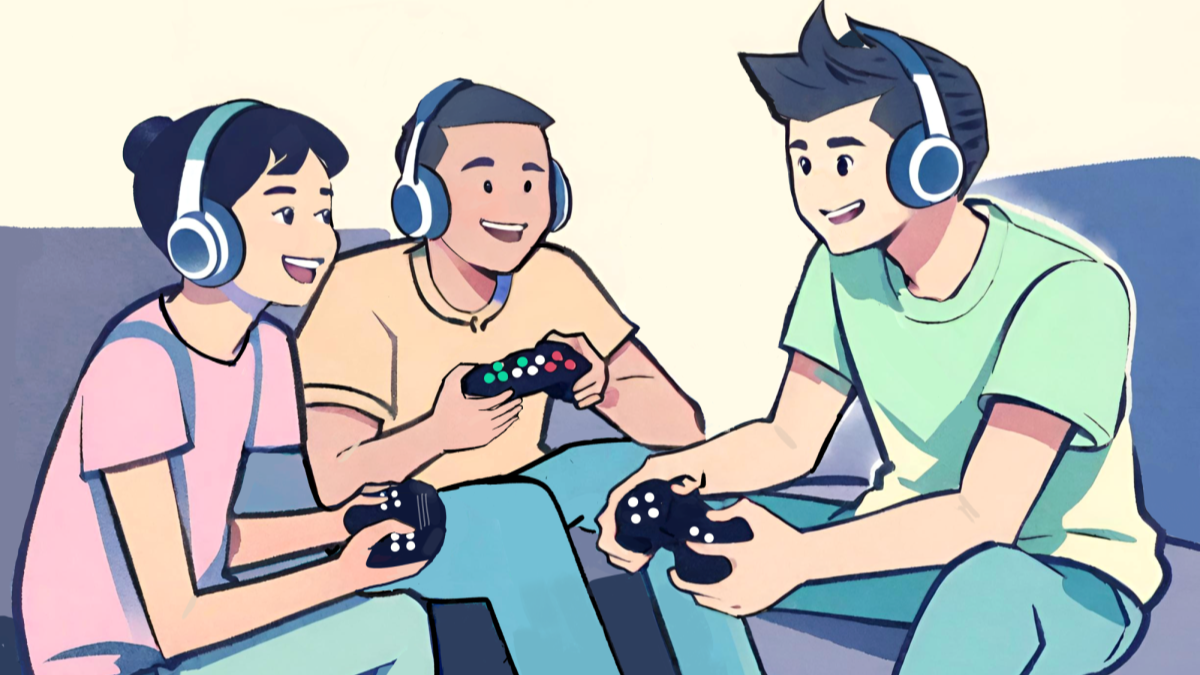
Online games have created a digital meeting place where people can play, compete, cooperate, and communicate across borders. A player in Thailand may join a game with someone from Europe, Asia, or another part of the world without sharing the same native language. That works because games have developed a kind of common language made from familiar words, icons, sounds, animations, menus, and simple actions. On platforms such as Fun88thai, this shared design language can make different types of online games easier to understand and navigate while keeping the focus on the gaming experience itself.
Gaming Has Created Its Own Shared Vocabulary
Spend enough time around online games and certain words start to feel almost universal. Terms such as level, score, mission, character, team, rank, match, leaderboard, upgrade, reward, and progress appear across many genres. A player may not know every sentence displayed on a screen, but they can often understand what a "score" means or recognize that a progress bar shows how far they have moved through a task.
This shared vocabulary did not appear by accident. Game developers have spent years using familiar terminology because players need to understand information quickly. During an active match, nobody wants to stop and translate a paragraph before figuring out what a button does.
The numbers behind gaming also show why this matters. Newzoo's global games research has tracked player behavior across 36 markets, with its Global Gamer Study surveying more than 73,000 gamers annually. Its market research also covers players across PC, console, and mobile ecosystems, showing just how broad the international gaming audience has become.
Visual design adds another layer to this shared language. A trophy can suggest achievement. A speech bubble usually indicates communication. A map icon points toward navigation. A green progress bar commonly suggests advancement, while a locked symbol tells the player that something is not yet available.
These cues are useful because they reduce the amount of reading required. Someone who has never played a particular game may still understand much of its interface simply by recognizing familiar patterns.
That is especially important on mobile devices. Smaller screens leave less room for lengthy explanations, so icons, short labels, animations, and clear menus have to do more work. Good interface design essentially says, "You know what this means," without needing a long explanation.
Localization Is More Than Translating Words
There is a big difference between translation and localization. Translation changes the language. Localization considers the complete player experience.
Imagine a game originally designed for one country being introduced to players somewhere else. Simply replacing English words with Thai words may solve one problem, but it does not automatically make the entire experience feel natural. Date formats, measurements, character names, cultural references, instructions, interface layouts, and even jokes may need consideration.
Research into game localization describes it as a process that involves adapting games technically, linguistically, and culturally for different markets. In other words, the job is not simply to swap one word for another.
This distinction becomes clear when instructions are short but context-heavy. A literal translation might be grammatically correct while still sounding strange to a local player. A properly localized version aims to communicate the same meaning in a way that feels natural.
Research on players and localization has also found that gamers themselves can influence localization practices. Players discuss translations, identify problems, request language support, and sometimes even contribute to community-based localization efforts.
For a Thai-focused gaming environment such as Fun88thai, this principle is relevant because the interface needs to be understandable to its intended audience while the underlying games may use concepts familiar to international players. A player should not have to fight the interface before getting to the game.
A practical design approach is straightforward: keep important labels short, use familiar terminology consistently, avoid unnecessary technical language, and make navigation predictable. When the same icon or term always performs the same job, players learn the system naturally.
Communication Tools Help Players Work Together
Language becomes even more interesting when several players enter the same game. A multiplayer match can bring together people who have completely different first languages. They may not be able to hold a detailed conversation, but they can still coordinate surprisingly well.
Consider a team-based game. One player sends a quick "attack" command. Another marks a location on the map. A third uses an emoji or reaction to acknowledge the message. Nobody needs to write a five-line explanation. The game has already provided a communication shortcut.
Common tools include:
Quick messages
Emojis and reactions
Team signals
Map markers
Preset commands
Voice chat
Text chat
Character gestures
These features are useful because they turn communication into something immediate. A flashing marker on a map can communicate urgency faster than a sentence. A thumbs-up reaction can confirm that a teammate's instruction was understood.
Research into multilingual online gaming has found that players can develop strategies for communicating across language differences. One study of a bilingual online game found that English- and Italian-speaking players still formed a single social network and developed ways to overcome language barriers.
Other research has examined multiplayer games as environments where players interact in another language. Studies of MMORPG communication have explored how conversations between native and non-native speakers can support language interaction and socialization.
That tells us something important about game design: communication does not always require perfect grammar. Sometimes it requires the right tool at the right moment.
Small Design Choices Can Make Global Games Easier to Understand
The smartest gaming interfaces often do not try to explain everything at once. Instead, they reveal information when the player needs it.
For example, a new player might first see a simple "Play" button. After entering a game, they encounter a small set of controls. Later, more advanced features become visible. This reduces information overload and gives players time to learn the system.
Consistency is equally important. If one screen uses a particular symbol for settings but another screen uses the same symbol for something completely different, confusion follows. The same problem happens when terminology changes unnecessarily.
Accessibility also matters. Clear text, readable fonts, visual indicators, subtitles, and alternative communication methods can help more players participate. Recent localization research has increasingly examined how nonverbal information, including sounds and visual cues, can be represented for players who may not receive information through audio in the same way.
This is where the idea of a shared gaming language becomes bigger than vocabulary. It includes what players see, hear, click, recognize, and expect.
A useful rule for game designers is simple: if an important action can be understood through a familiar visual cue as well as text, provide both. If communication can happen through a quick signal instead of requiring a full sentence, give players that option.
The Future of a Shared Gaming Language
Online gaming is becoming increasingly global, and the lines between mobile, PC, and console experiences continue to overlap. Newzoo's current research tracks gaming markets across more than 100 countries and regions, while its ecosystem research follows major PC, console, and mobile platforms.
That global scale makes clear communication more important, not less.
The language of online games is no longer limited to written words. It combines familiar gaming terms with icons, animations, sound, interface patterns, localization, and fast communication tools. These elements give players a common foundation even when their native languages are different.
For platforms such as Fun88thai, the lesson is simple: a well-designed gaming environment should not make players work unnecessarily hard to understand the experience. Clear navigation, familiar terminology, appropriate localization, and flexible communication can help people from different backgrounds meet on common ground.
The real strength of online gaming is that players do not always need to speak the same language to understand each other. Sometimes a symbol, a quick command, a shared objective, or a simple action is enough to start the conversation.
Genre: GAMES / Checkers