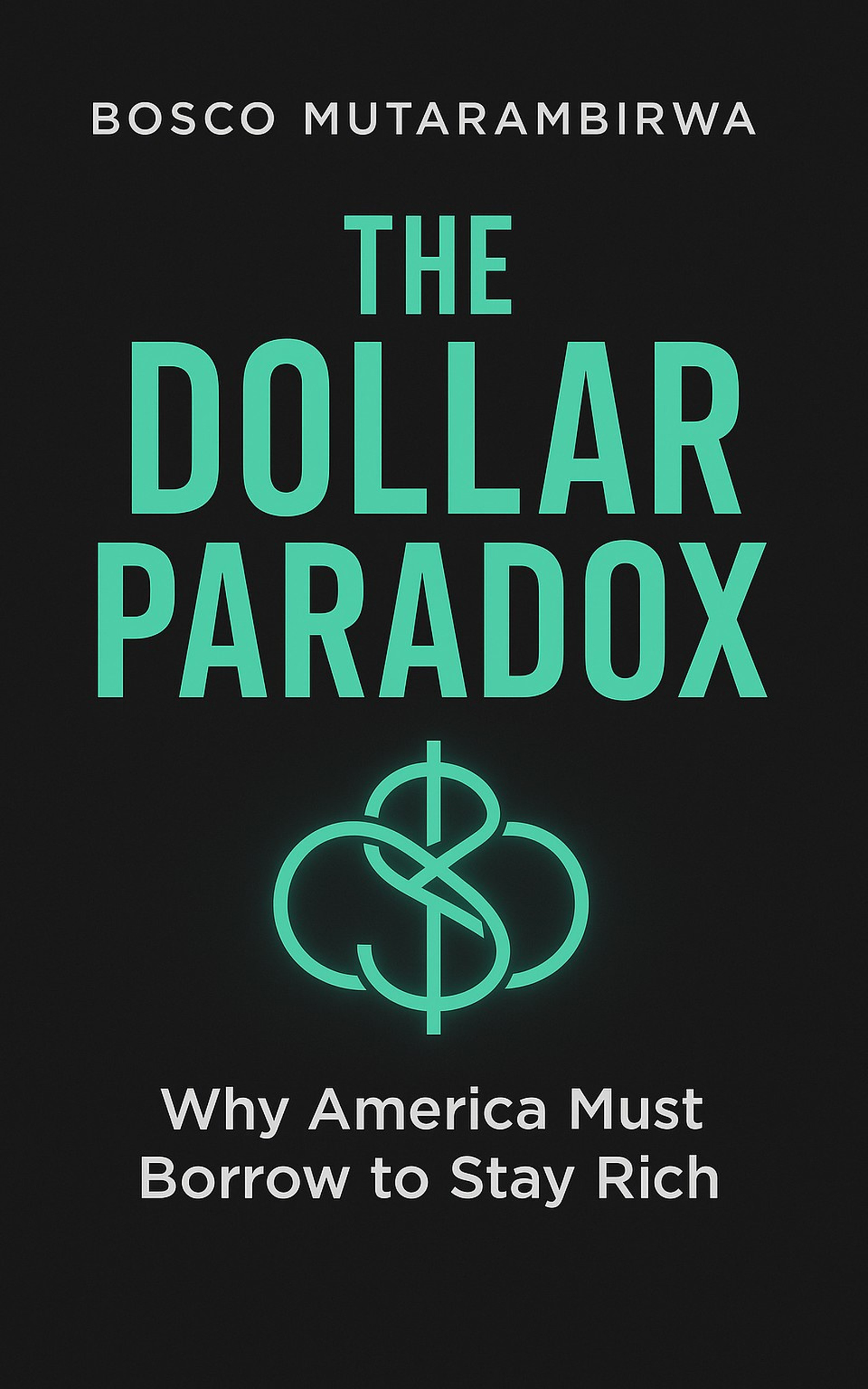
TRANSLATION LANGUAGES CURRENTLY SOUGHT
• French
• Portuguese — Brazilian Portuguese strongly preferred
• German
• Japanese
• Spanish
• Dutch
Please submit offers only for these languages.
Translators with experience in economics, finance, monetary policy, central banking, or geopolitics are strongly preferred. Treasury-market, Federal Reserve, reserve-currency, repo, sanctions, and digital-currency terminology must be handled accurately while remaining accessible to general readers.
Why does the United States borrow dollars when it can create dollars? The Dollar Paradox argues that the answer is not insolvency or irrationality, but credibility.
The book explains why the institutional separation between the U.S. Treasury and the Federal Reserve forces the government to finance spending through markets, and why that visible discipline helps protect confidence in the dollar. It shows how Treasury securities function not only as government debt but also as savings instruments, benchmark assets, and indispensable collateral for the global financial system.
Moving from history to financial mechanics and geopolitics, the book examines the 1951 Treasury–Federal Reserve Accord, Treasury auctions, the repo market, inflation credibility, foreign demand for dollar assets, sanctions and reserve immobilization, de-dollarization, central bank digital currencies, debt sustainability, tariffs, and the tension between austerity and growth.
Written for readers who want a clear account of the machinery behind American financial power, The Dollar Paradox turns a seemingly absurd question into a guide to the institutions, incentives, risks, and policy choices that keep the dollar-centered system functioning.
Genre: BUSINESS & ECONOMICS / Money & Monetary PolicyPublished in English in 2025, this professionally produced independent title is a recent release and does not yet have a notable sales ranking. Its subject has strong international relevance because debates about U.S. debt, the Federal Reserve, de-dollarization, reserve currencies, sanctions, inflation, CBDCs, and global financial power affect readers well beyond the United States. The manuscript is approximately 75,073 words. The author will support translated editions through DarwinPublications.com, Goodreads, LinkedIn, and related book-promotion channels.
It is the most frustrating, common-sense financial question in the world: Why does the wealthiest nation on Earth borrow money it can simply print?
Every taxpayer, investor, and casual observer knows three facts. The U.S. dollar is the reserve currency that fuels international trade. The federal government carries trillions of dollars in debt. And the Federal Reserve has the authority to create dollars.
When those facts collide, the result is the contradiction that defines modern finance: The Dollar Paradox.
Why pay interest to borrow a currency the country itself issues? Why finance spending through auctions and bond markets instead of creating the money directly?
The counterintuitive answer is that the United States borrows not because it is broke, but because the borrowing ritual protects institutional credibility and restrains inflation. The separation between the fiscal Spender and the monetary Printer is a self-imposed guardrail. Treasury debt also supplies the world with a deep pool of liquid collateral and safe assets.
To understand the debt is to understand American power—and the price paid to preserve it.