TRANSLATION LANGUAGES CURRENTLY SOUGHT
• French
• Portuguese — Brazilian Portuguese strongly preferred
• German
• Japanese
• Spanish
• Dutch
Please submit offers only for these languages.
Translators with experience in political history, international development, foreign policy, economics, humanitarian assistance, or global affairs are especially encouraged.
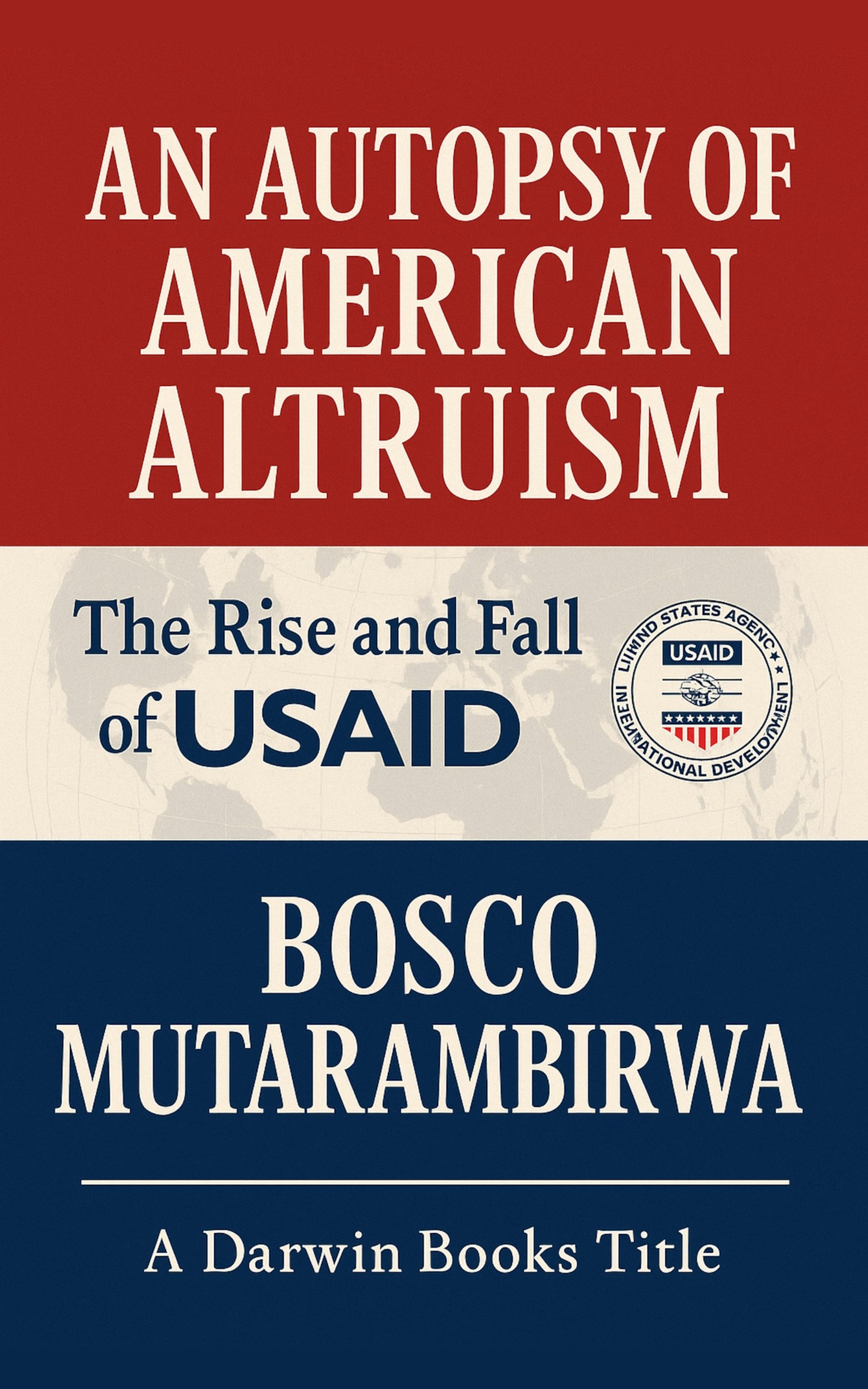
For more than six decades, the United States Agency for International Development stood as the most visible expression of America’s promise to help other nations prosper. Its programs built schools, supported public-health campaigns, strengthened institutions, responded to disasters, and carried American influence into nearly every region of the world.
But USAID was built around a fundamental contradiction: it promised self-reliance while administering continued involvement, promoted partnership while controlling the resources, and pursued humanitarian goals while remaining answerable to American strategic interests.
An Autopsy of American Altruism traces the rise, transformation, and fall of USAID—from the Marshall Plan and Point Four Program to President Kennedy’s creation of the agency in 1961; from Vietnam, Latin America, and Africa to the Washington Consensus, the contractor system, the War on Terror, the crisis of legitimacy, and the agency’s dismantling in 2025.
The book examines how foreign assistance became entangled with Cold War strategy, market ideology, military operations, bureaucracy, political conditionality, and the expanding influence of private contractors. It also recognizes USAID’s achievements and the commitment of the Foreign Service Officers, civil servants, local employees, and development professionals who tried to make an imperfect institution serve a humane purpose.
This is neither an unquestioning celebration of foreign aid nor a simplistic attack on the people who administered it. It is an examination of the institutional architecture that repeatedly placed altruism and power in conflict.
At its center is a question that extends far beyond the United States: Can one nation genuinely help another become independent while retaining control over the money, priorities, standards, and definition of progress?
Written for readers interested in international relations, American foreign policy, global development, humanitarian aid, postcolonialism, geopolitics, soft power, and the changing relationship between the United States and the Global South.
Genre: POLITICAL SCIENCE / International Relations / GeneralPublished in English in late 2025 and available in print and ebook editions, the book has had modest English-language sales to date and has not yet achieved a notable sales ranking.
However, its subject has substantial international relevance beyond its current English-language performance. The book examines the rise, transformation, and dismantling of USAID; the relationship between foreign aid and American power; Cold War strategy; humanitarian intervention; development economics; postcolonialism; aid dependency; private contractors; and the changing relationship between the United States and the Global South.
The subject is particularly relevant to readers in Francophone Africa, Latin America, Brazil and Lusophone Africa, Europe, India, and other markets interested in international development, American foreign policy, geopolitics, humanitarian assistance, and global governance.
The 101,620-word book is professionally published, extensively researched, and updated through the dismantling of USAID in 2025. The author will actively support translated editions through DarwinPublications.com, Goodreads, LinkedIn, and other social-media channels.
Every empire begins by promising to do better than the ones that came before it. Rome promised law. Britain promised civilization. America promised virtue.
That promise was not whispered in backrooms or buried in manifestos. It was broadcast openly, in speeches and pamphlets, across podiums and radio waves, carried on the breath of presidents and the pride of a victorious nation emerging from the wreckage of World War II. The United States believed it had found a different formula for power—one that did not require conquest, colonies, or coercion. Its new weapon was generosity.
But generosity, when institutionalized, develops an ego.
When the war ended, Europe was starving and exhausted, Asia destabilized, Africa caught between fading colonial rule and rising ambitions. Into that void, America stepped with an offer the world had never seen: money without annexation, assistance without occupation, uplift without overt domination. The Marshall Plan was not merely an aid program; it was a performance of benevolence—a demonstration that the world’s richest new power would use its resources to restore, not to rule.
Yet beneath that benevolence lay an unspoken wager: that gratitude would evolve into alignment, and alignment into influence. Aid was kindness, yes—but it was also architecture.